

The Zig Jig System
How the Zig Jig works
The jig, the technique and the rod, built to work together.

What's a Zig Jig?
Built to fall wrong, on purpose
The action of the Zig Jig marabou trout lure is unequaled in its ability to attract and catch fish. Unlike round or symmetrical heads, which fall straight down, the offset shape of the Zig Jig head makes it zig-zag like wounded prey as it falls. This unique action keeps the Zig Jig in the strike zone longer and gives the illusion of wounded prey, which drives fish crazy.
It's a hand-tied marabou jig with a powder-coated head and a very sharp, extra-strong hook, designed to withstand the abuse from rocks and gravel and to keep you hooked up when that big fish hits.
My customers have told me many times that they would rather lose a jig to a hang-up than have the hook straighten out on a big fish, and I agree!Richard Cross, founder

Purposely designed
A head shaped for the zig-zag
The Zig Jig head isn’t a round ball with a hook in it. It was designed on purpose so the jig won’t sink straight down. As it drops, it zig-zags like wounded prey.

A better mousetrap
Built for anglers who fish hard
At first glance, a Zig Jig doesn't look much different from any other marabou jig. The difference is in the details. We worked a long time on the shape and weight distribution of the head to get the action right, then went after everything that fails on a cheap jig: paint that chips off in 15 minutes, feathers that pull loose, thread that comes untied and hooks that straighten out.
Trout hit it on the reaction. We've caught trout with minnows, shad, crawfish and sculpins still in their mouths, and had fish hit before the jig dropped two inches.
- 01
Powder-coated heads
It costs us more, but the paint stays on through rocks, gravel and a ton of abuse.
- 02
Mustad Ultra Point hooks
We changed hooks three times before settling on Mustad Ultra Point black nickel: sharp out of the pack, and they stay sharp and strong.
- 03
Plenty of marabou
More marabou slows the sink rate, so the jig stays in the strike zone longer. You can always take marabou off, but you can't add it.
- 04
Single hook, easy to go barbless
Pinch the barb with pliers and it's legal in single-barbless-hook water.
The pop-and-drop retrieve
How to fish a Zig Jig
Trout and most other fish hit the Zig Jig on the drop about 90% of the time, usually at the bottom of the drop or as it nears the bottom.
-
01
Cast across the current
Cast perpendicular to the flow, or quartering downstream just a little.
-
02
Let it sink
On a slack line, let the jig sink to within 3″ to 6″ of the bottom. Count it down at about one foot per second.
-
03
Pop it
Give it a good pop with your rod tip.
-
04
Drop and reel
Drop your rod tip as the jig falls on the slack line, reeling in the excess. When it's almost on the bottom, pop it again.
-
05
Repeat all the way in
You usually won't feel the bite. When you pop at the bottom of the drop, you'll either pop the jig or set the hook.
-
06
Adjust your speed
Not catching fish? Slow down so the jig gets deeper. Hanging up a lot? Speed up or pop it sooner.

On the water
Watch the fish, then match them
The water on the White and Norfork rivers is normally clear enough to estimate how deep it is. A good pair of polarized sunglasses is a must, both to judge depth and to see fish chase the Zig Jig.
When you see a fish chasing the jig, adjust your retrieve to the speed the fish seem to want that day. Many times the fish will swirl and strike all the way to the boat, and many are caught within three or four feet of it, including some pretty nice-sized fish.
Primarily, we use 1/16th and 1/8th ounce jigs, and if the water is high, we may go to the 1/4th ounce to get closer to the bottom.Jim Brentlinger, Linger’s Guide Service

Complete the system
The Crossfire rod
The Crossfire rod was engineered specifically for the techniques used to fish the Zig Jig most effectively. Take a look in any catalog and see how many quality 6′8″ one-piece rods you can find that will cast a 1/32 oz lure. We kept tweaking the action, the backbone and the components until we found the right match.
It's great for any kind of finesse fishing for trout, crappie, bass, bream and walleye: long casts with light lures, the sensitivity to feel your lure, and the power to land the big one.
- 01
6′8″ IM6 graphite
One-piece spinning rod.
- 02
Ultralight, extra fast action
Rated for lures from 1/32 to 5/16 oz.

Zig Jig HD
Born at Pyramid Lake
In November 2014, a guide on Pyramid Lake in Nevada called. A customer, John Cancilla from California, had big fish straighten the hook on some regular Zig Jigs. A year later the Zig Jig HD (Heavy Duty) was born: the same head design with a Mustad black nickel steelhead 2X strong hook.
Richard met John in Reno that April and fished four days on Pyramid Lake, home of the world's largest cutthroat trout, to make sure the hooks held up. They did. If you fish water where you know you'll hook big trout, steelhead, smallmouth, walleye, largemouth or lake trout, the HD lets you hook them and land them. Some customers even fish them in saltwater.
I'm an odd angler. I like the odd sizes: 3/32 and 3/16, and I'll be trying out the new 3/8 soon. All of my trophy trout and walleye were caught on 3/16 oz. I think the most overlooked jig we have is the 3/16 oz Heavy Duty.Johnny Bates, owner of White River Zig Jig and former owner of 8 Mile Guide Service
The lineup
Pick your line

Zig Jig
Hand-tied marabou, powder-coated offset head, Mustad Ultra Point hook. 1/32 to 1/4 oz.

Heavy Duty
Same head with a Mustad 2X strong steelhead hook, for water where big fish live.

Super HD
Heavier 1/4 to 1/2 oz heads with 2x hooks to get down fast in deep or heavy current.
Micro Jigs
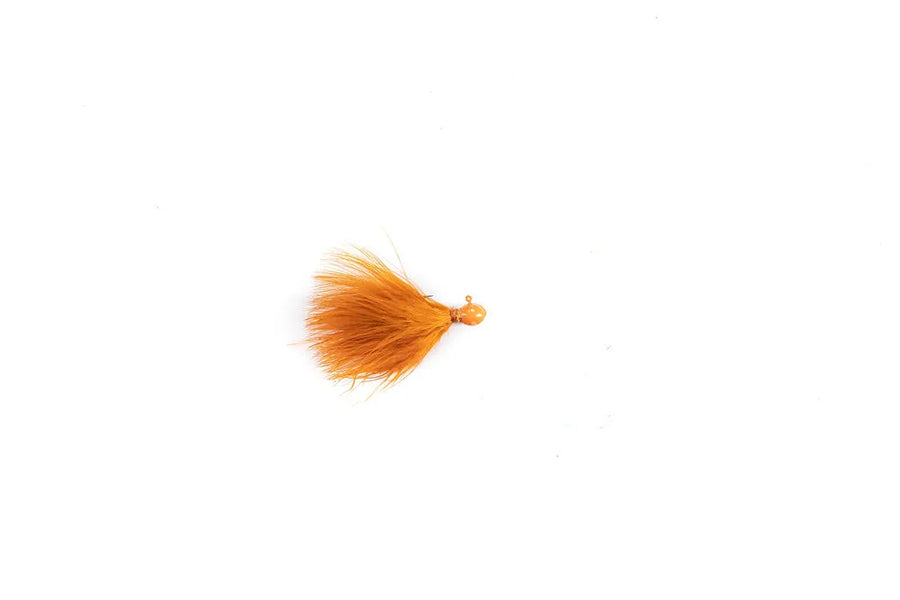
Tiny 1/124 to 1/64 oz jigs for skinny water and pressured fish.

3 Packs
Three-jig packs in our most popular weights. A low-cost way to test new colors.

Crossfire Rods
6′8″ IM6 ultralight spinning rod built to cast a 1/32 oz jig a long way.
Proven on the water
44 species and counting
The zig-zag fall and the pop-and-drop retrieve don't just work on trout. Customers have sent us catches of 44 species so far, 23 freshwater and 21 saltwater, from Arkansas tailwater browns and Alaska steelhead to roosterfish in the Gulf of California. All of the saltwater fish and the Pyramid Lake cutthroat were caught on Super HD Zig Jigs.
Questions
Questions about the Zig Jig
How do you fish a Zig Jig?
Cast across the current and let the jig sink to within 3 to 6 inches of the bottom. Pop it with your rod tip, then drop the tip and reel in the slack as it falls. Repeat all the way in.
Why don't I feel the bite?
About 90% of strikes come on the drop, usually at the bottom of the fall or as it nears the bottom, while the line is slack. When you pop at the bottom of the drop, you'll either pop the jig or set the hook.
What size Zig Jig should I start with?
Most of our guides fish 1/16 and 1/8 oz, and move up to 1/4 oz when the water is high so the jig gets closer to the bottom. If you're not catching fish, slow down so the jig gets deeper. If you're hanging up a lot, speed up or pop it sooner.
When should I use a Heavy Duty or Super HD?
Use the Heavy Duty anywhere you expect big trout, steelhead, smallmouth, walleye or lake trout. It has the same head on a 2x-strong Mustad steelhead hook, so big fish don't straighten it. Use the Super HD for big lakes, deep water and saltwater.
What rod works best with a Zig Jig?
The Crossfire, a 6'8" one-piece IM6 graphite ultralight spinning rod with an extra-fast action, rated for lures from 1/32 to 5/16 oz. It was built to cast a 1/32 oz Zig Jig a long way and still have the backbone to land a big fish.

Shop online
Ready to make every cast count?
Hand-tied jigs in every weight and color, shipped anywhere in the country.
Shop Zig Jigs
Find a store
Pick some up near the river
20 tackle shops, resorts and fly shops in Arkansas, Utah, Colorado, New Mexico and California carry Zig Jigs.
Where to buy
Talk to us
Have a question for our team?
Help with an order, picking a color, or what's working on the river this week.
Contact us